Tru Grit Tree Service LLC CCB #248133
ESTIMATES ARE FREE CALL 503-457-5251
wE ARE PROUDLY INSURED AND BONDED BY Integrity Insurance & Bonding Inc.
EMERGENCY STORM DAMAGE, STORM DAMAGE CLEAN UP, TREE REMOVAL, TREE TRIMMING, PRUNING, THINNING, BRUSH CLEARING, STUMP GRINDING, REPLANTING, KITTY RESCUE, LAWN CARE, & FENCING.
Our services are listed as follows but are not limited to the list. Please give us a call to discuss any services that we may assist you with that are not listed.

EMERGENCY STORM DAMAGE
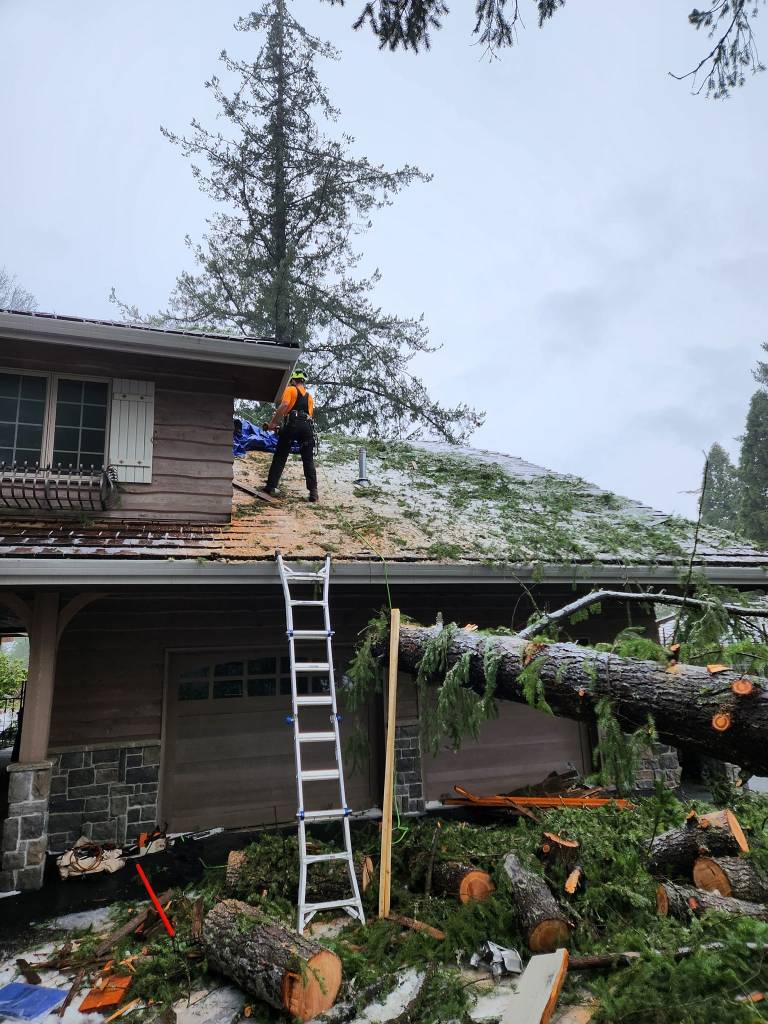
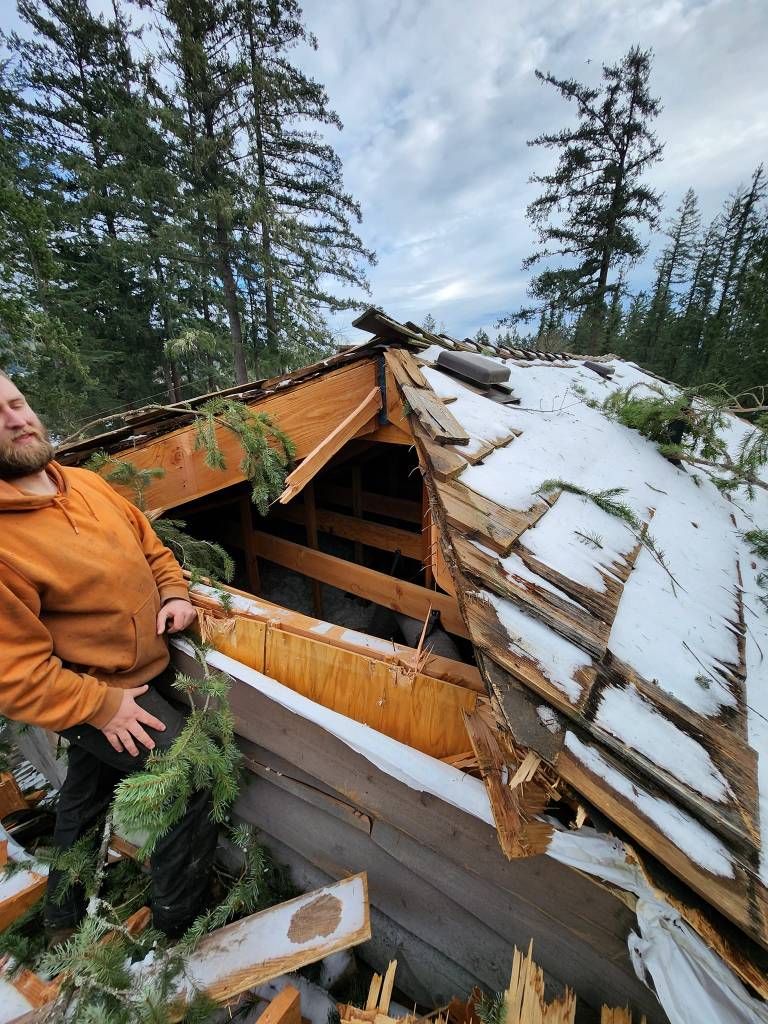
Every homeowner’s worst nightmare is waking up to a tree falling on their house. Terrifying as it is, we are here to help you. We are open 24/7 365 days a year specifically for urgent and emergent needs. We will assist you through this process by removing the tree and cleaning up the debris. We will assist with tarping your home to keep it protected until the time repairs can be done.

STORM DAMAGE CLEAN UP
If there is a severe storm that causes damage to your property with falling natural debris, we offer our storm clean up service. This service consists of branch removal, full clean up of damaged trees, and if needed assistance with damaged fencing.

Tree Removal
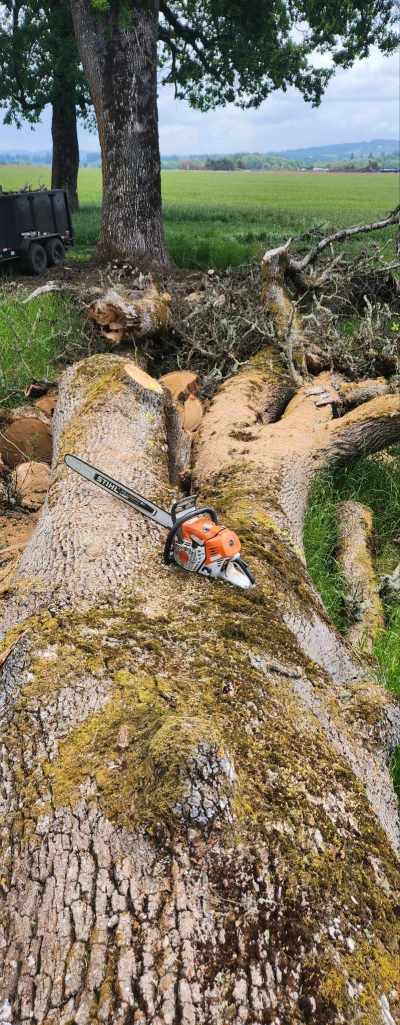
This service consists of a planned removal of unhealthily, nuisance, damaged, or unsightly trees. We will remove the tree with up-to-date technology in rigging. Safety is our top priority on the job site and we will safely remove your tree.

Tree Trimming & Pruning
This service consists of line clearing, selective pruning, fruit pruning, & crown reduction. We will not top trees because it is unhealthily for the tree and creates more issues down the road unless it is a fruit bearing tree.
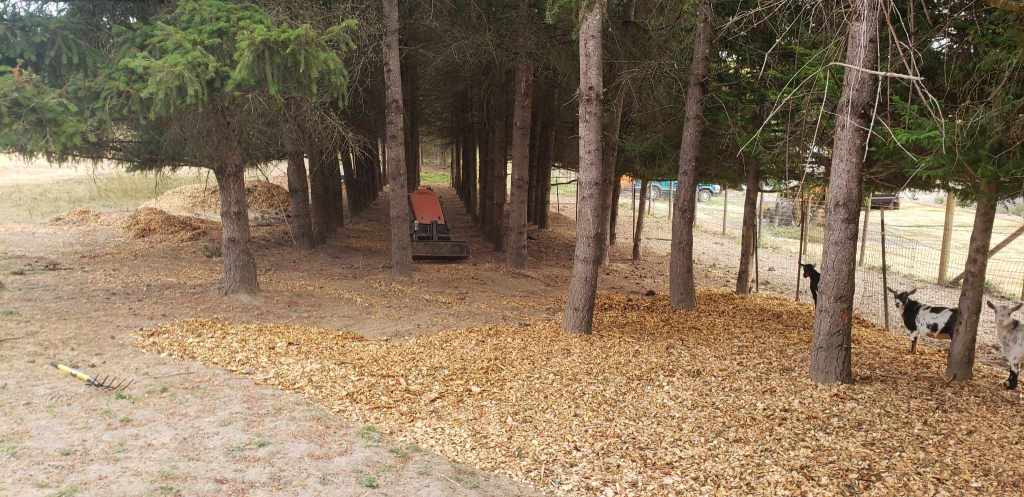
Brush Clearing
This service consists of cleaning up the brush that fell from the tree. Typically this service is accompanied by a removal. We will not remove old leaves, moss, and any organic matter that was previously at the site unless discussed and itemized on our bid for services.
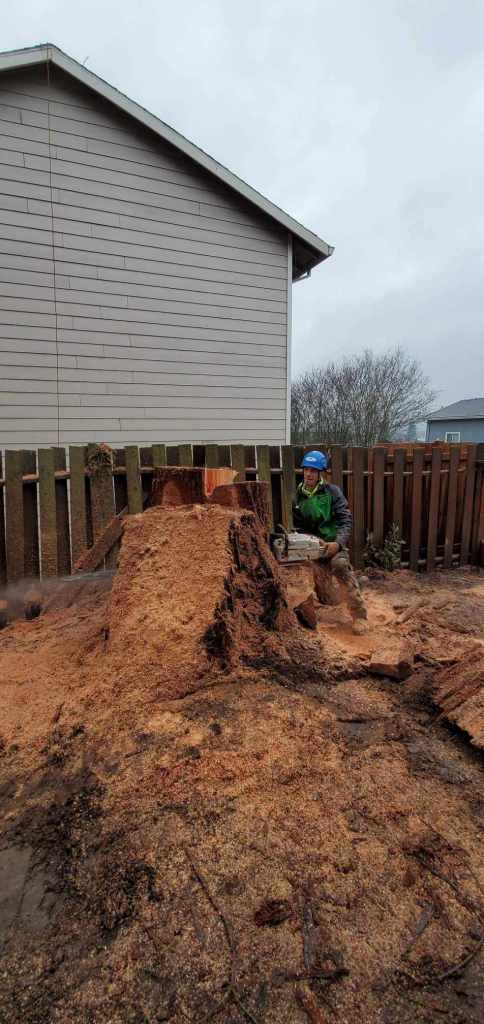
Stump Grinding
This service consists of surface grinding or complete removal of the stump and roots. Surface grinding typically is a couple inches below grade. Full removal is sixteen to twenty inches below grade. Stump grinding debris will be left on site unless previously arranged.

Replanting
Typically this service is accompanied with a tree removal. We can discuss options for the replacement and review native & nuisance trees in our region.

Kitty Rescue
We offer our services to the community with kitty rescues. We are avid animal lovers and we will go above and beyond to assist with retrieving your distressed fur baby from a tree.

Fencing
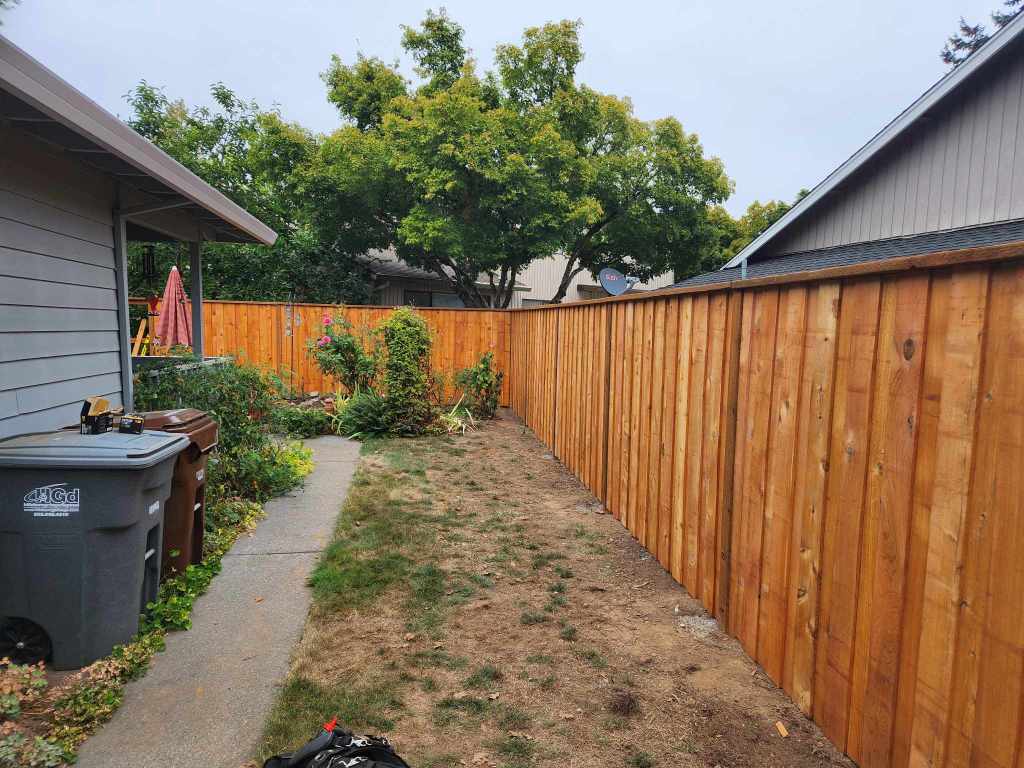
We offer our fencing services as a supplemental service to our tree services. Arborvitae fencing is common practice in Oregon but sometimes they die off and homeowners decide to do a wood fence as a replacement. We can assist with the removal and then with the building of a new fence.




submit our web inquiry form and our team will reach out to you.
If this is an urgent matter please call us directly at 503.457.5251


customer testimonials
“I will use them again. They were very communicable always. Did good work. Was impressed as to how hard they worked. Clean up was good”
– Penny.
“Great service! We had a huge dead fir tree they were able to take down as well as trim up many other trees on our property. Thorough clean up afterwards. Owner Shane was on site for the whole day. Highly recommend this company”
– Jan J.
“These guys are amazing. They took 5 large mountain ash down and cleaned it all up in a day n half. The are very professional and hard working. Will definitely be using them again”
– Carol S.
“I am very very happy with the work performed and would not hesitate to highly recommend Shane and his crew to friends and family.”
– Jeff D.
“Our cat was missing for 4 days! When we finally found her last night she was down the road in a very large tree! Tru Grit said they would be here first thing in the morning to get her out! They showed up first thing and climbed over a 100ft tree to get her out! Professional, kind and had her out in no time! Thank you so much for saving our Snowball!”
– Elle H.
“We had the pleasure of having tree work done by Tru  Grit tree service. Shane and his crew did a top notch job on removing some very big trees in my yard. They were very safe I have neighbors close by. My yard never looked better. Thank you Shane and Tru Git. Excellent job. Would not hesitate to hire them again”
– Scott C.
“Shane and his guys did an awesome job removing and clearing more than 20 huge trees on our property after they were compromised by the storm and replanting 10 large 14” new trees.
Shane’s communication is great which makes it so much easier to work with him.
I definitely recommend his services!”
– Tamar N.
“Tru Grit is an exceptional tree service company and so much more. Shane is hardworking, dependable and a true artist with an excavator. After the winter storm our road and only entry point to our home was devastated. Shane took care of that. .”
– Jim L.
“Tru Grit did a great job for us, removed 1 tree and trimmed back 4 others. They were quick and cleaned up nicely. They actually worked on a few extra things above and beyond what we had requested. They are a first class operation..”
– T M.
Love our service?




WHAT DOES TRU GRIT MEAN TO US?
The first thing that comes to mind is the western classic True Grit with John Wayne. We are not John Wayne but for us Tru Grit is where honesty meets courage and determination despite difficulty. We apply this motto in our farm life and in our business practices. Nestled at the watery basin of Henry Hagg Lake Oregon our farm is a quiet oasis. We enjoy working on our land making beautiful gardens, spending time with all our kids, animals, and living a quiet simple life. On this site you will find a list of our services, contact form, brief bio’s, frequently asked questions, fun tree facts, & information on destructive beetles in Oregon.
About our family

Shane OWNER
Shane has an extensive background in arboriculture and with operating heavy equipment. He has worked decades in construction, roofing, tree service, & landscaping. Shane is the go to man for all our estimates. He is honest with our clients about their needs and when it is time to do the job he works just as hard if not harder than the crew to make sure the job is done right. Shane enjoys working on our farm and cuddling his fur son Willie.

ELIZABETH OWNER
Elizabeth has an extensive background in business management and web development. Recently she left her career in healthcare to pursue their dream of a family owned business. She is our go to for all of our clerical work. She is meticulous with documentation and enjoys doing the business paperwork. In her free time she enjoys spending time with her family, riding horses, and working on her art projects. Elizabeth specializes in animal portraits.
FREYA
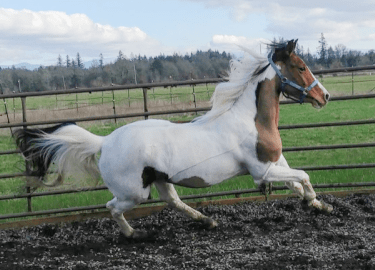
Freya our die-hard powerhouse. A loving and faithful companion.

storm
Storm is our newest addition to the family. Storm is a mellow boy.
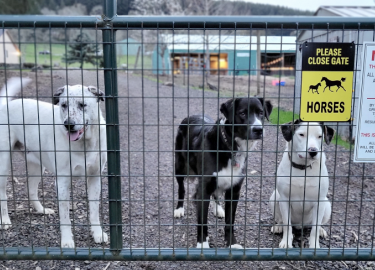
OUR BOYS
Copper, Tucker, and Willie from left to right our pack of boys.

the goats
Referred to as our babies Aster, Sweet Pea, and Poppy.
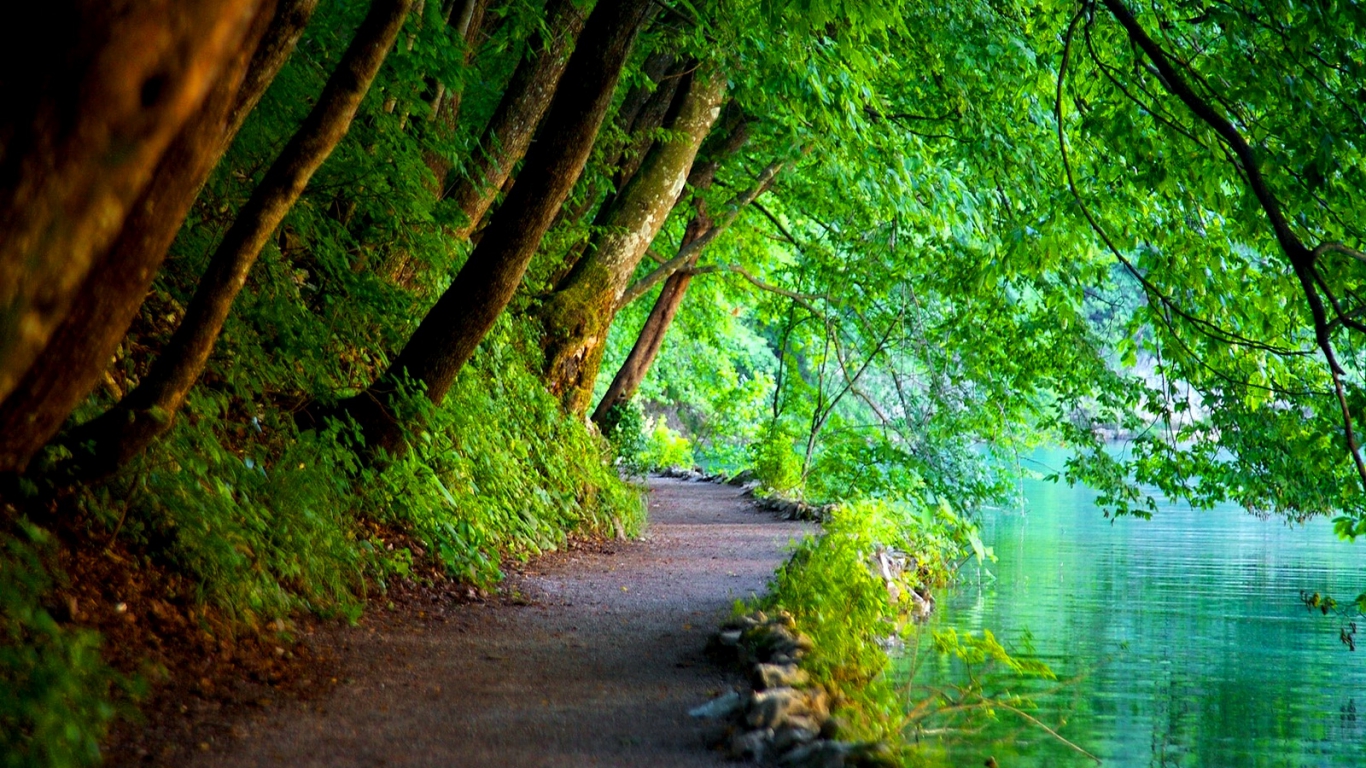
wAndering through the woods.
We explore woodland habitats and observe the diverse flora that call this area home.
FREQUENTLY ASKED QUESTIONS
A tree fell on my house what do I do?
First check to make sure everyone in the household is not hurt. Second assess the damage by determining if there are signs of electrical sparks or water pouring in. If these things are presant then you will need to call the fire department for assistance with water and electrical. If there is no need to call the fire department then call us. We will speak with you to review the damage and then we will determine the best course of action going forward. We highly recommend speaking with us before calling your homeowners insurance because we can assist you in fully utilizing your insurance benefits.
Is my tree healthy?
Healthy trees have dense bark, strong branches, and lots of vibrant leaves. Regularly inspect for bare spots, excessive dead branches, and signs of tree disease. Keep trees healthy with proper pruning, mulching, watering, and fertilizing. Mushrooms on the tree are a clear sign of decay and death.
How safe is my tree?
This is dependent on what type of tree we are speaking about. Some tree are higher risk than others. For example a flowering Plum tree is prone to breaking more than a native species tree. Plum trees with can avoid breakage with regular trimming and maintenance.
What kind of tree is it?
When performing an estimate for services we will confirm the type of tree and then advise if the tree is native or considered a nuisance tree.
Trees on the Nuisance Plants List
- Norway maple
- Sycamore maple
- Horse chestnut
- Tree-of-heaven
- Cutleaf birch
- English hawthorn
- English holly
- Golden chain tree
- Empress/princess tree
- White poplar
- Sweet cherry
- English laurel
- Black locust
- European mountain ash
How often do my trees need to be trimmed?
Conifer trees, evergreen trees: trimming & evaluation every 3-5 years. Conifer trees can not be cut more than 50% back because it will not grow back.
Deciduous, leaf bearing trees: trimming & evaluations every 3-5 years like conifers. But unlike conifers leaf bearing trees can be cut 50% or more back and will grown back lush and beautiful.
Regular tree maintenance is to confirm that the tree is healthy, safe and contributes to property values.

always take the scenic route.
FUN TREE FACTS
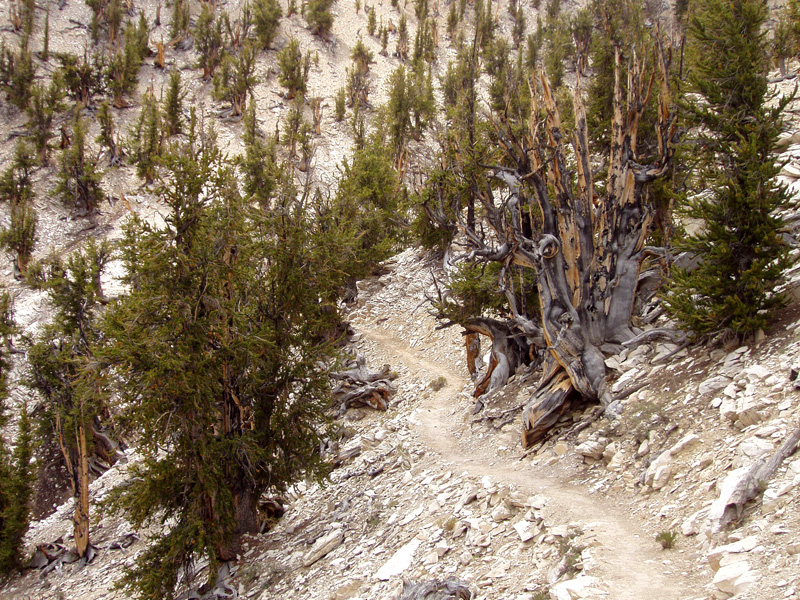
The oldest tree in the world
Methuselah is a 4,854-year-old Great Basin bristlecone pine tree growing high in the White Mountains of Inyo County in eastern California. Methuselah was 4,789 years old when sampled in 1957. The United States Forest Service does not disclose its exact location.
If a birdhouse is hung on a tree branch, it won’t move up the tree as the tree grows.
This is because trees grow from the top. Specialized cells in the ends of the tree shoots form areas called meristems. These meristems are the locations from which a tree grows taller and limbs grow longer. Because trees grow from their most distal ends, it means that a branch will always be the same height as it was the day it emerged from the trunk as a little bud. However, just because tree branches do not rise as a tree grows doesn’t mean they will always be there, many trees shed their lowest branches as they grow.
Trees are the longest living organisms on Earth
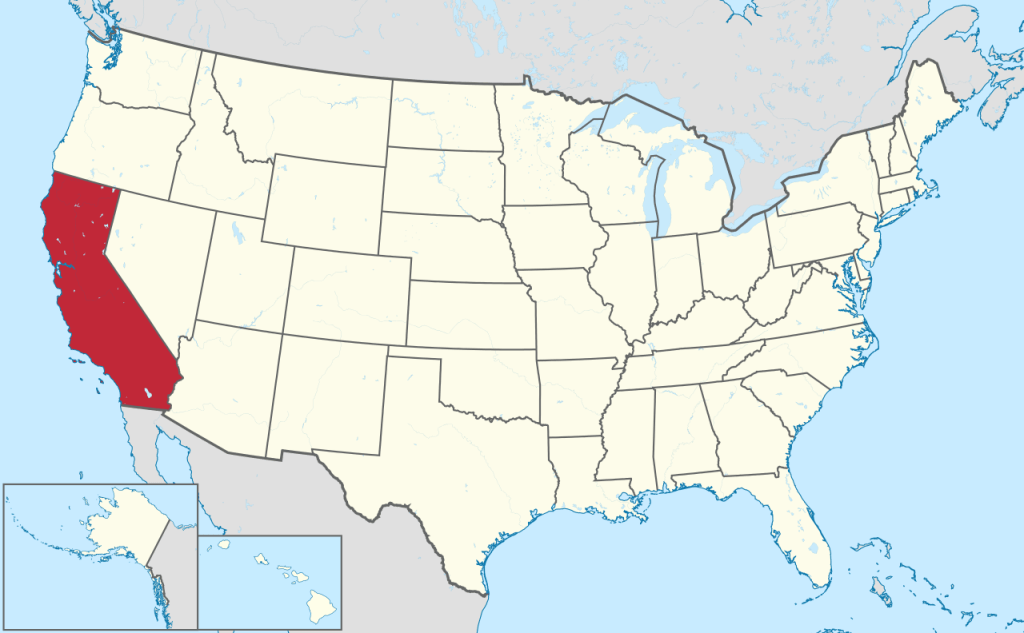
California holds the record for the oldest living trees. Some of the state’s bristlecone pines and giant sequoias are 4,000-5,000 years old. Methuselah, an estimated 4,852-year-old ancient Bristlecone Pine, is one of the oldest living trees in the world.
A Large Oak Tree Can Drop 10,000 Acorns in One Year
During an acorn boom, known as a mast year, a single large oak can drop as many as 10,000 nuts. And while most of those may end up as a meal for birds and mammals, every so often a lucky acorn gets started on a journey that will carry it hundreds of feet into the sky and a century into the future.

Trees Didn’t Exist for the First 90% of Earth’s History
Earth is 4.5 billion years old, and plants may have colonized land as recently as 470 million years ago, most likely mosses and liverworts without deep roots. Vascular plants followed about 420 million years ago, but even for tens of millions of years after that, no plants grew more than about 3 feet (1 meter) off the ground.
The oldest known planted date tree
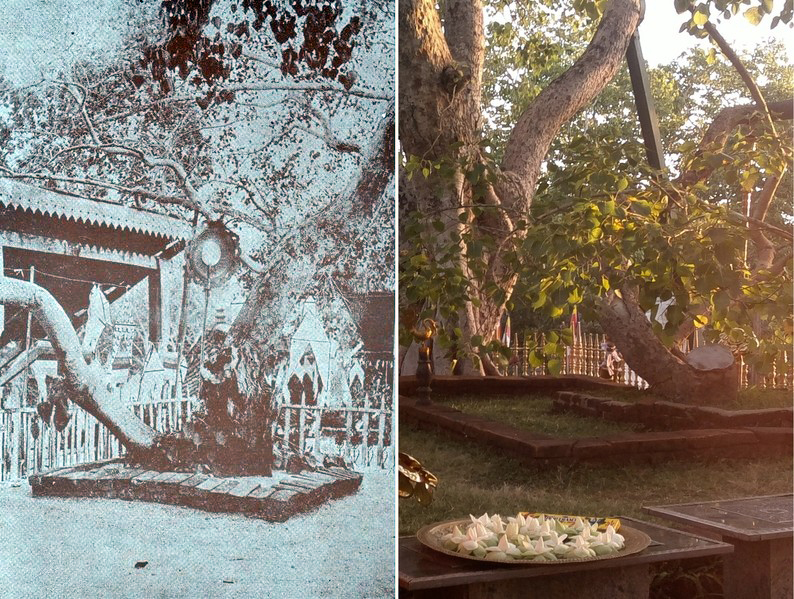
Jaya Sri Maha Bodhi is a historical sacred bo tree in the Mahamewuna Garden in historical city of Anuradhapura, Sri Lanka. This is believed to be a tree grown from a cutting of the southern branch from the historical sacred bo tree, Sri Maha Bodhi, which was destroyed during the time of Emperor Ashoka the Great, at Buddha Gaya in India, under which Siddhartha Gautama (Buddha) attained Enlightenment. The Buddhist nun Sangamitta Maha Theri, a daughter of Indian Emperor Ashoka, in 288 BC, brought the tree cutting to Sri Lanka during the reign of Sinhalese King Devanampiya Tissa. At more than 2,300 years old, it is the oldest living human-planted tree in the world with a known planting date
Before Trees, Earth Was Home to Fungi That Grew 26 Feet Tall
From about 420 million to 370 million years ago, a mysterious genus of creatures named Prototaxites grew large trunks up to 3 feet (1 meter) wide and 26 feet (8 meters) in height. Scientists have long debated whether these were some kind of weird ancient trees, but a 2007 study from the University of Chicago and the National Museum of Natural History in Washington, D.C. concluded they were fungi, not plants.
Trees can help to reduce stress.
Research suggests that being around trees is good for our mental and social well-being. A study conducted by the University of Illinois and the University of Hong Kong found that the denser the forest, the lower the stress, which suggests that taking a walk down a tree-lined street could prove beneficial to your mental wellbeing. Research also suggests that nature experiences help us to feel kinder toward others. This is partly because they release chemicals called phytoncides. When we breathe them in, it can reduce blood pressure, lower anxiety levels, and increase pain threshold.


nature is not a place to visit,
it is home.
destructive beetles in oregon
There will be massive canopy change to our trees if we do not educate ourselves on these destructive creatures. Our business is not about destroying trees but preserving our beautiful trees for generations to come. We will always advise to save the tree if it is possible.

Emerald Ash Borer Beetle
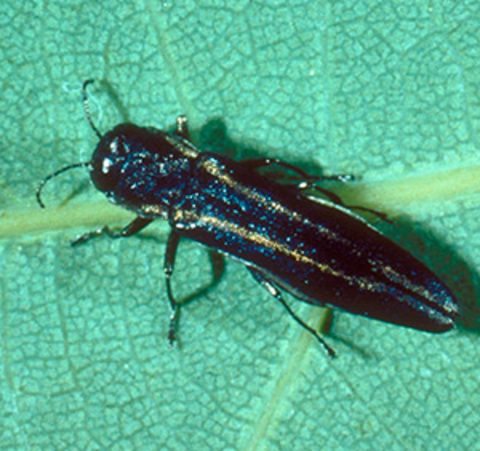
Emerald ash borer is an invasive insect species. It has killed hundreds of millions of ash trees in the US Midwest and East Coast since it was first detected in 2002. The first observance of EAB on the west coast occurred on June 30, 2022, in Forest Grove, Oregon.
All ash species are at risk from EAB, including the native Oregon ash. This tree species is a vital part of natural areas along rivers and streams in Western Oregon.
Damage
- The beetle’s cause canopy thinning and dieback. They disrupt the tissues that conduct water and nutrients in the tree.
- EAB leaves characteristic “D”-shaped exit holes in the bark when they emerge in late May / June. The holes are about 1/8-inch in diameter.
- Heavy infestations can kill susceptible trees in a couple of years
Bronze Birch Bore Beetle
This native insect is a serious pest of ornamental birch trees, especially some of the white-barked species. Grown as specimen trees, white-barked birches are often sited in heavy clay soils or grown under other adverse conditions, making them stressed and more susceptible to borer attacks than they would be in a more favorable environment. While all species of birch can be attacked, many white-barked birches are more susceptible than other species.
Damage
- The adult bronze birch borer is attracted to trees under stress. The adult itself does not damage the tree, but does lay eggs on the bark. The eggs will then hatch into larvae that tunnel under the bark. The wilting occurs because of the tunnels created by the larvae.
- Peeling back bark from infested trees will further reveal irregular, winding, sawdust-packed tunnels. It is these tunnels that girdle the branches and eventually kill trees. Trees that receive no corrective measures usually die within a few years after the first dead branches are found.

Japanese beetle
The Japanese beetle is a highly destructive plant pest that can be very difficult and expensive to control. Feeding on grass roots, Japanese beetle grubs damage lawns, golf courses, and pastures. Japanese beetle adults attack the foliage, flowers, or fruits of more than 300 different ornamental and agricultural plants.
Damage
- The adults typically skeletonize leaves, consume flowers, and devour fruits. The upper canopy is often defoliated first. Trees with extensive feeding damage turn brown and become partially defoliated.
- Japanese beetle grubs primarily feed on roots of turf and ornamentals, but will also feed on roots of garden and field crops such as corn, beans, tomatoes, and strawberries.
- Dense populations can kill large areas of turf grass and seriously injure or kill other plants.
Western Pine Beetle
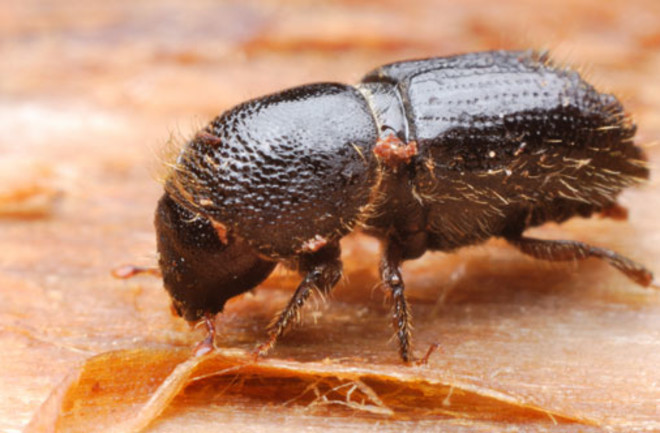
Western pine beetle is a bark beetle that infests the boles of 6” in ponderosa pine trees. This beetle can cause tree mortality in mature and second growth ponderosa and outbreaks usually occur in trees weakened by drought, fire, root disease, soil compaction or mechanical damage. Infestations increase dramatically following periods of drought. Second-growth ponderosa pine stands growing in the oak zone of southwestern Oregon and on the east flank of Mt. Hood are particularly susceptible to attack during dry years.
Damage
- The western pine beetle, Dendroctonus brevicomis LeConte, can aggressively attack and kill ponderosa and Coulter pine trees of all ages and vigor classes that are 6 inches (15cm) or larger in diameter, including apparently healthy trees
- Western pine beetle attacks can be confirmed by removing the bark beneath pitch tubes exposing their reducing stocking levels to 55-70% of the basal area needed for full site utilization lowers the risk of beetle infestation
CHECK OUT OUR YOU TUBE CHANNEL
the earth has music for those who listen.
William Shakespeare
Tru Grit Tree Service LLC CCB #248133
Serving the greater Portland Metro Area for tree services.
“You must pay for everything in this world one way and another. There is nothing free except the Grace of God. You cannot earn that or deserve it.” ― Charles Portis, True Grit
 Tru Grit Tree Service LLC CCB #248133